Understanding the link between scalp and strands is essential.
If you’ve noticed more conversation around scalp health recently, that’s no coincidence. Just as digestive health and the gut microbiome have become mainstream concepts in the wellness world, research on scalp health and hair loss has rapidly developed in recent years. Your scalp has a microbiome, too, and looking after that delicate ecosystem can make all the difference when it comes to promoting strong, shiny hair.
What’s more, as scientists’ understanding of scalp health and hair loss has grown, we’ve seen a host of new treatments showing impressive results for male and female pattern balding. Here, we discuss common hair loss causes and cutting-edge treatments, and explain how your salon can help when it comes to hair wellness, from optimal cut, colour and backwash treatment options, to the at-home products that will support your scalp and your strands.
WHAT IS ANDROGENETIC ALOPECIA?

The most common type of hair loss globally, androgenetic alopecia (AGA) is a genetic condition that affects up to 80% of men and 50% of women by the age of 70. It’s called androgenetic because it’s caused by elevated levels of dihydrotestosterone (DHT), a type of androgen hormone, in the hair follicles on the scalp. DHT causes the follicles to gradually shrink, so when one hair falls out, the next one grows back thinner, until the follicle closes up and the hair stops growing back altogether.
Known as male pattern baldness in men and female pattern baldness in women, androgenetic alopecia is more common in men because men generally produce more testosterone and have more androgen receptors on the scalp. Plus, women have the female hormone estrogen and an enzyme called aromatase that have a protective effect against AGA.
Androgenetic alopecia tends to appear differently in men and women. Male pattern baldness typically starts with a receding hairline and crown thinning or a bald spot, while female pattern baldness is characterised by diffuse hair loss across the crown and top of the scalp. AGA hair loss in women may be noticeable due to a wider parting rather than receding at the front.
Not all hair loss is caused by androgenetic alopecia, however, and your hairdresser is a great first point of call if you’ve noticed more shedding than usual or the start of a receding hairline. While a stylist can’t diagnose medical conditions, from their vantage point in the salon, they can observe changes to your hair and offer their advice on next steps if you’re concerned about hair loss.
OTHER CAUSES OF HAIR LOSS
While androgenetic alopecia is the most common cause of hair loss in both men and women, there are several other reasons for temporary hair loss. In these cases, the hair follicle remains healthy, but something has caused it to enter a ‘resting’ or ‘shedding’ phase. The most common type of this temporary hair loss is telogen effluvium or ‘shock shedding’. Causes include:
-
Hormonal changes. Significant changes to levels of estrogen, for example, after childbirth, during perimenopause or menopause, can trigger hair loss. Postpartum hair loss caused by hormone levels returning to normal after pregnancy is very common. An underactive or overactive thyroid (diagnosed via a standard blood test) can also cause hair loss as an excess or lack of thyroid hormones sends follicles into the resting phase prematurely.
-
Stress. When the body experiences elevated cortisol levels caused by chronic stress, it can respond by sending hair follicles into the resting phase to divert energy and nutrients away from what it sees as a non-essential process.
-
Illness & nutritional deficiencies. Infection, fever or surgery can trigger hair shedding, sometimes weeks or months after the event, while a lack of nutrients such as iron or protein can also lead to hair loss. A blood test ordered by your GP can identify any nutrient definicies that could be affecting your hair or scalp health.
-
Medication. Medicines that are known to cause hair loss include anticoagulants, beta-blockers, and retinoids.
-
Rapid weight loss & GLP-1s. When you lose weight quickly – whether from dieting, illness, surgery or GLP-1 drugs such as Ozempic (semaglutide) or Mounjaro (tirzepatide) – your body can go into ‘survival mode’ and cut off the energy supply to the hair follicles. In addition, emerging research suggests that GLP-1 use could also accelerate androgenetic alopecia if someone is predisposed to it.
-
Tension alopecia. Unlike telogen effluvium, tension or traction alopecia is hair loss caused by prolonged or repetitive pulling on the hair from tight or protective hair styles (ponytails, buns, braids) or heavy hair extensions, and can be exacerbated by chemical relaxers. If caught early, tension alopecia is reversible, but if the traction continues for a long time it can become permanent.
HOW CAN YOUR HAIR SALON HELP WITH SCALP HEALTH AND HAIR LOSS?

While you should always consult a doctor about persistent or sudden hair loss, talking to your hairdresser can be a helpful first step when thinking about scalp health and hair shedding. You may have heard the garden analogy, where your scalp is the soil and hair is the grass. Fertile soil is needed to ensure lush green grass, and the same goes for healthy hair. A hair stylist can take a look at your scalp, follicles and hair strands, assess any changes they may notice, recommend products to support your scalp or hair health, and tell you when it’s best to seek advice from a healthcare professional.
By chatting about your home haircare routine, a hairdresser can advise on how to optimise your scalp and hair health with washing and conditioning (how often and with which products) through to styling (too much heat styling or rigorous brushing can irritate the scalp and weaken the hair), tailoring their advice according to your hair type and concern. Dry or sensitive scalps may need a gently cleansing shampoo, for example, while oily or dandruff-prone hair might benefit from a scalp scrub.
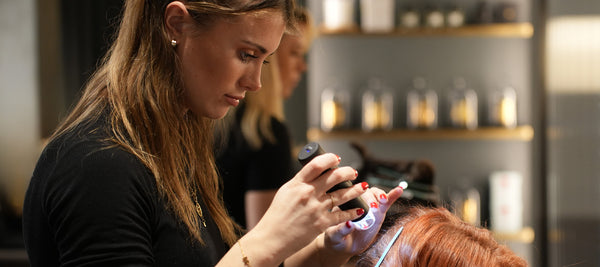
At Paul Edmonds London, we offer scalp detox appointments, where one of our scalp health experts will start by asking how your scalp has been feeling – because things like itchiness, dryness, dandruff or an oily scalp can be a sign of underlying problems. They will use a magnifying tricho camera to look closely at the skin and follicles on your scalp, assessing hair density and checking for flakiness, blocked follicles, hair breakage, or any areas of irritation. They will take photos with the camera to save on your profile and use to monitor your progress over time.
After the initial assessment, the treatment continues with a scalp cleanse product chosen according to your needs, which is applied while the hair is dry and left for 10 to 20 minutes. In addition, your stylist might recommend steaming to help the product penetrate the scalp and hair (unless you have sensitive skin that’s easily irritated by heat). The cleansing product is rinsed out, followed by shampoo if necessary, then a few drops of targeted scalp serum (options include detoxifying, soothing or moisturising) are applied and massaged in. After drying your hair, your stylist will go back in with the tricho camera to see how the skin and follicles look post-treatment.
HAIR LOSS TREATMENTS: WHAT'S AVAILABLE NOW & WHAT'S COMING NEXT?
In the past, androgenetic alopecia was seen as an unavoidable consequence of ageing for those who are genetically predisposed to the condition, but that’s no longer the case. As hair loss research has evolved, so have treatments, and there are now a variety of effective solutions available, from established topical and oral drugs to hair transplant surgery and emerging aesthetic treatments.
-
Minoxidil. Applied topically or taken as a low-dose oral prescription, minoxidil counteracts AGA by widening scalp blood vessels and extending the hair growth phase. It is one of the best-established hair loss treatments.
-
Finasteride. Prescription-only medications Finasteride (trade name Propecia) and a stronger version, Dutasteride (Avodart), work by blocking DHT production, but are not usually prescribed to premenopausal women as they can cause foetal abnormalities.
-
Platelet-Rich Plasma. This promising new treatment involves drawing blood from a patient, extracting platelet-rich plasma (PRP) and injecting it into thinning areas to stimulate blood flow and hair growth.
-
Low-level light/laser therapy. Sometimes recommended in addition to oral or topical drugs, low-level light/laser therapy (LLLT) uses medical-grade red light to penetrate the scalp and stimulate the production of a chemical fuel called ATP, which signals follicles to produce thick, healthy hairs. Originally done in clinics or medispas, LLLT devices are now available for home use.
-
Microneedling. Designed to increase the effectiveness of topical treatments, microneedling uses tiny needles to puncture the scalp (typically with a sterilised roller or mechanical pen), creating microscopic channels for absorption. Research shows that microneedling enhances minoxidil efficacy compared to use of the drug alone.
-
Hair transplantation. While not a treatment for the underlying causes of androgenetic alopecia, hair transplants are the most established surgical technique for replacing hair in thinning areas, and have become hugely popular in the last five years. Often used to regrow men’s receding hairlines, the method involves taking living follicles, typically from the back of the head, and moving them to bald areas, where they take root and grow permanently. Performed under local anaesthetic, hair transplants are minimally invasive but take up to two weeks to heal, with the final results appearing around six to 12 months later.
-
Emerging regenerative treatments. Researchers continue to explore novel solutions for AGA targeted at people for whom traditional approaches aren’t effective. Emerging treatments include the use of exosomes (a kind of messenger cell that could stimulate follicular growth); microbiome therapies; and peptide and growth-factor formulations. More long-term, large-scale studies are needed to determine their effectiveness and suitability.
-
Androgen-receptor targeting drugs. A type of pharmaceutical that has been getting a lot of attention lately, androgen-receptor targeting drugs such as KX-826 (pyrilutamide) are applied topically to hair follicles. By shielding the follicles from DHT, they prevent the ‘shrinking’ effect that causes hair loss. Clinical results have been promising, but it’s not yet licensed in the UK.
HAIRCUTS & COLOUR FOR THINNING HAIR

If you are experiencing hair thinning, whether temporary or progressive, your haircut and colour can make a huge difference to the overall appearance. The right style and colour choice can add volume and make hair look thicker, while some cuts and shades can have the opposite effect.
“The right haircut can make thinning hair look much fuller by creating shape and removing excess length or weight that can make the hair appear flat and sparse,” says Hayley Kemm, men’s hair expert at Paul Edmonds London. “Keeping the shape structured and avoiding over-thinning helps maintain density. Colour can also create the illusion of fullness by adding dimension, depth and contrast, which makes the hair appear thicker and gives it more visual texture.”
Weight is particularly important for creating volume, Hayley says. “Too much weight can pull the hair down and make it sit flatter against the head, particularly when the hair is fine. By removing or redistributing weight in the right areas, we can encourage lift, movement and volume. However, with thinning hair, it’s important not to remove too much, as this can reduce the appearance of density.”
Similarly, while it may be tempting to grow your hair longer when it starts to thin, shorter cuts can actually help, especially for men. “Shorter cuts often make men’s thinning hair appear stronger and denser because there is less length weighing the hair down,” Hayley says. “A shorter, well-structured shape can create more lift and make the difference between thicker and thinner areas less noticeable. Adding texture through the top and keeping the sides tighter can also create the illusion of greater density and a more balanced shape overall.”
SCALP CARE & PRODUCTS
It’s important to remember that androgenetic alopecia can only be addressed with medical treatments, but at-home haircare products are a great way to support healthy hair growth. Think of it like tending to the ‘garden’ of your scalp. Sometimes you need to water the grass (hydration), other times you need to sweep away dead leaves (exfoliation) or add some fertiliser (a scalp serum).
At Paul Edmonds London, we’ve got a wide range of scalp-focused products tailored to different scalp and hair concerns. Unless you have a very sensitive scalp, we recommend exfoliating once a week with the Davines Solu Sea Salt Scrub Cleanser or Naturaltech Detoxifying Scrub Shampoo.


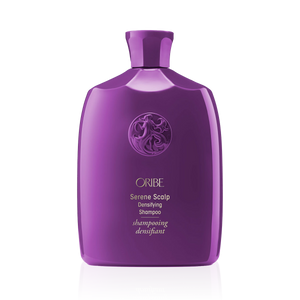
For scalp-friendly cleansing, the Oribe Serene Scalp Shampoo range has options for Balancing (dry to normal hair), Densifying (promoting thicker hair) and Oil Control (for reducing excess oil).


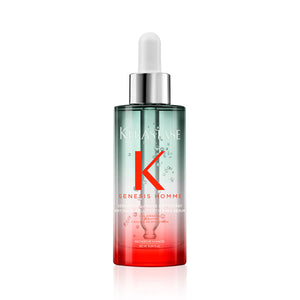
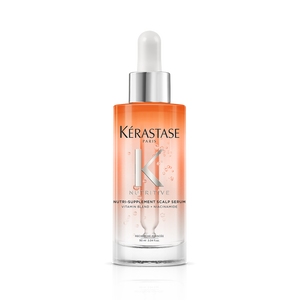
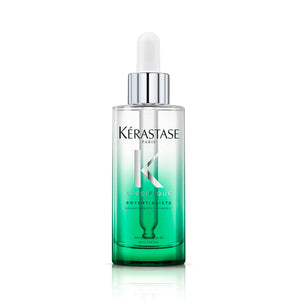
A scalp serum acts as a moisturiser while also delivering active ingredients that address your hair and scalp needs. Kérastase has a brilliant range of serums, including Genesis to prevent hair shedding; Nutritive with hydrating niacinamide; and Potentialiste for promoting healthy hair growth.
FREQUENTLY ASKED QUESTIONS
Q: What is androgenetic alopecia?
A: Androgenetic alopecia is the most common form of progressive hair loss. Influenced by genetics and androgen hormones, it typically presents as a receding hairline and/or thinning around the crown in men, and diffuse thinning and/or a wider parting in women.
Q: Can a hair salon help with hair loss?
A: A salon cannot diagnose or medically treat hair loss, but professional stylists can support scalp and hair health, recommend suitable products and create cuts and styles that enhance thinning hair.
Q: Can a haircut make thinning hair look thicker?
A: Yes. The right cut, shape, texture and colour placement can create the appearance of volume, greater density and movement.
Q: What causes hair loss in women?
A: There are many potential causes of hair loss, including genetic factors, hormonal changes, stress, illness, nutritional deficiencies, rapid weight loss and certain medications, including GLP-1s. Persistent or sudden hair loss should be discussed with a healthcare professional. Whatever the cause, there are now lots of effective treatments and solutions for female hair loss.
Q: When should I see a doctor about hair loss?
A: Sudden, rapid, patchy or unexplained hair loss warrants professional medical assessment, particularly if it is accompanied by scalp changes or other symptoms.
Support your scalp
Scalp health has become a buzzy beauty topic in recent years, and with good reason. As researchers have discovered, looking after your scalp helps lay the foundation for healthy hair, which is why it’s worth investing in a scalpcare routine.
At the same time, major developments in hair loss research have shone a light on what can be a very emotive topic. Now, with so many treatment options available (and more in the works), in many cases you can stop hair loss in its tracks and enjoy a full head of hair for longer.
Concerned about hair shedding or scalp health? Book a scalp consultation with a hair health expert at Paul Edmonds London.